Needle Punched Geotextile Fabric for Landfill Project in Australia
Case · 2025-12-30 · 0 views
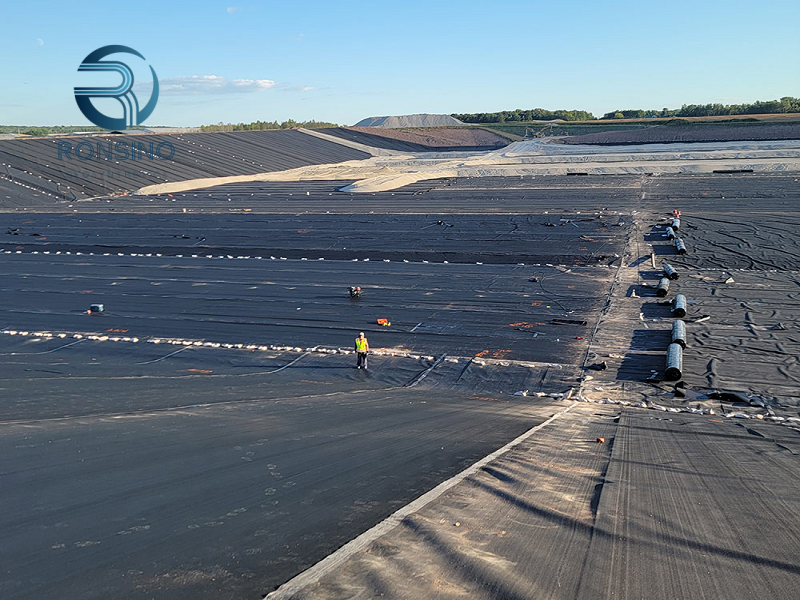
Needle Punched Geotextile Fabric has the following Advantages:
It has good air permeability and water permeability, allowing water to pass through, thereby effectively intercepting sand and soil loss.
Effectively diffuse, transfer or decompose concentrated stress to prevent soil from being damaged by external forces.
Prevent mixing between the upper and lower layers of sand, gravel, soil and concrete.
The mesh is not easy to be blocked, and the mesh structure formed by the unshaped fibrous tissue has strain and mobility.
High water permeability, it can still maintain good water permeability under the pressure of soil and water.
Corrosion resistance, using polypropylene or polyester and other chemical fibers as raw materials, acid and alkali resistance, no corrosion, no insects, and anti-oxidation.
Simple construction, light weight and easy to use.
Needle Punched Geotextile Fabric is made from polypropylene or synthetic fibers via weaving, needle-punching, or thermal bonding. This durable material offers high strength, permeability, and deformation resistance. RONSINO’s nonwoven geotextile provides ground reinforcement, soil stabilization, and civil engineering solutions. It features tensile strength, UV resistance, filtration, and abrasion durability for long-term performance. Used in construction, it excels in filtration, separation, protection, and drainage, ensuring structural integrity and efficiency.
Polyester fiber resists acids and weak alkalis, remains stable to various oxidants and reducing agents. However, it is not resistant to strong alkalis, which can embrittle it. Polypropylene fiber exhibits good chemical stability, acid and alkali resistance, and stability to oxidants.
Polyester is more resistant to sunlight than polypropylene, which requires UV stabilization for extended outdoor use. Since geotextiles are mostly protected from light during service, they pay more attention to acid and alkali resistance rather than photodegradation. Polypropylene adapts to a variety of environments with its balanced properties.Polyester has moderate acid resistance, but is susceptible to alkali corrosion and is not suitable for high pH environments. The pH of landfill leachate fluctuates greatly, so polypropylene short fiber non-woven fabrics are the best choice due to their comprehensive chemical stability.
Geotextile Construction Method for Domestic Waste Landfill
Storage, transportation and treatment of geotextile
Protect PP geotextile rolls before installation. Stack them in a dry area, ensuring water drainage. Limit stack height to four rolls. Safeguard rolls during transportation to prevent damage. This includes moving them from storage to the work site.
The connection and stitching of geotextile
For surfaces with minimal incline (less than 10% gradient), hot melt welding is the recommended joining method. When dealing with more pronounced slopes, either continuous stitching or hot melt welding techniques can be utilized for geotextile installation. The connecting filament must consist of a polymeric material exhibiting a minimum tensile strength of 60 Newtons. It's crucial that this bonding material demonstrates chemical stability and ultraviolet resistance that meets or exceeds the performance characteristics of the primary geotextile material.
Case Study Of Needle Punched Geotextile Fabric
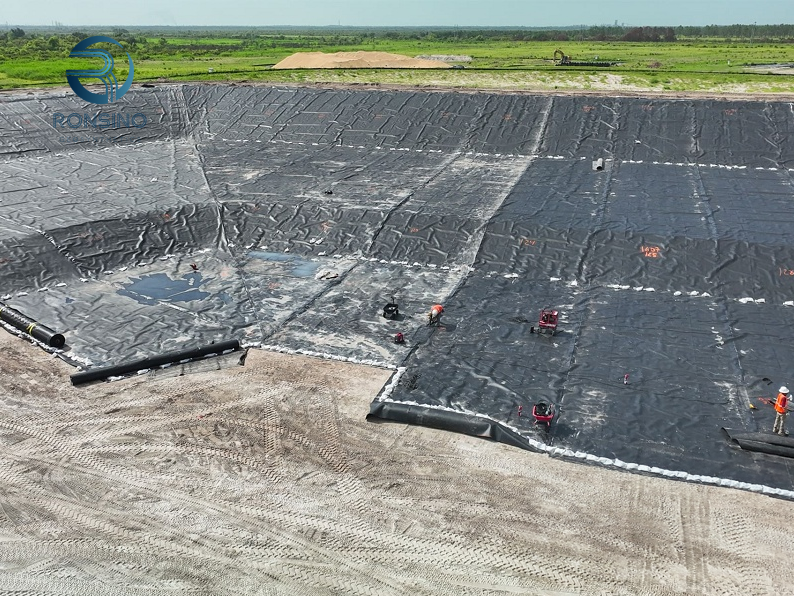
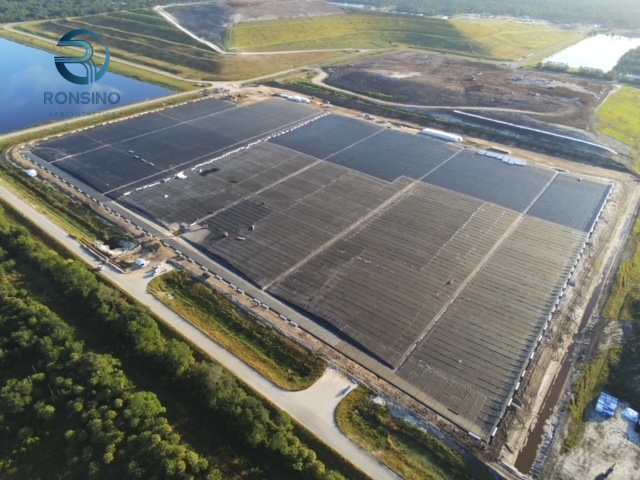
With the increasing number of domestic wastes, the Australia government vigorously develops landfill projects, and the government allocates funds to support these landfill projects to ensure the country’s environmental sanitation and people’s water safety issues.
In early 2020, Australian clients reviewed our government tender submission for civil engineering geosynthetics, including geomembranes, geotextiles, and drainage nets. After consultations, we sent 2m² samples for quality testing. All products had previously passed IGS-certified lab tests in Thailand. Satisfied with the results, an Australian partner placed a significant order.
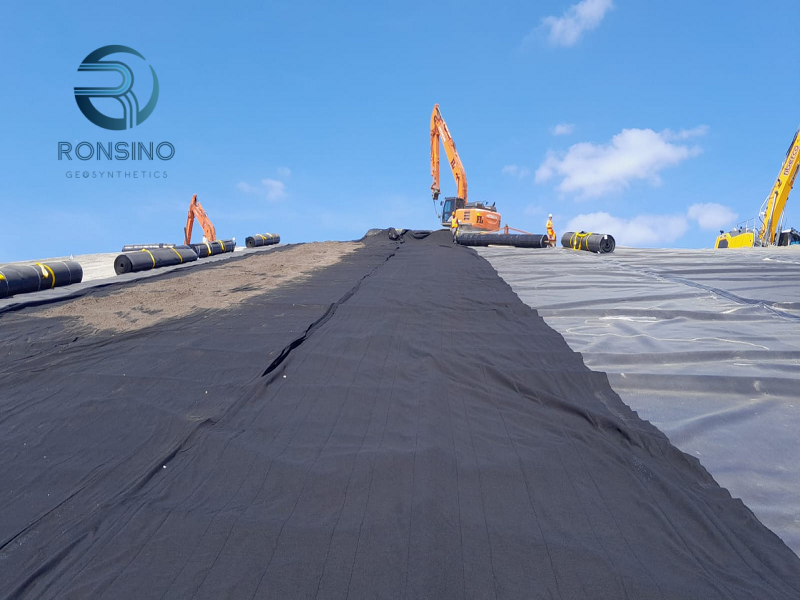
Specifications of Needle Punched Geotextile Fabric for Landfill Project in Australia
Geotextile – 300gsm,44000 square meters
Geomembrane – 1.5mm, 44000 square meters
Geocomposite 700gsm,44000 square meters
About RONSINO
RONSINO manufactures and wholesales many types of effective and states of the art geotextile, geomembrane, and other geosynthetics to over 36 countries. RONSINO geosynthetic products are widely used across a variety of industries including waste containment, water containment, aquaculture, industrial project, energy project and mining projects, etc. RONSINO main customers are from Australia, France, Sweden, UK, Hungary, New Zealand, Poland, Mexico, Ecuador, Brazil, Pakistan, Bangladesh, Thailand, Vietnam, Malaysia, Indonesia, Singapore, Philippines, Sri Lanka, India, UAE, Saudi Arabia, Qatar, Kenya, etc.
RONSINO is not only manufacturing best quality geosynthetic products but also providing professional design and installation service. OEM, ODM, custom development and fabrication are also available. If you have any questions or inquiries, please fill and submit the following form, we will reply as soon as possible.