Comprehensive Pricing Handbook for Geocellular Systems
Blog · 2026-08-07 · 0 views
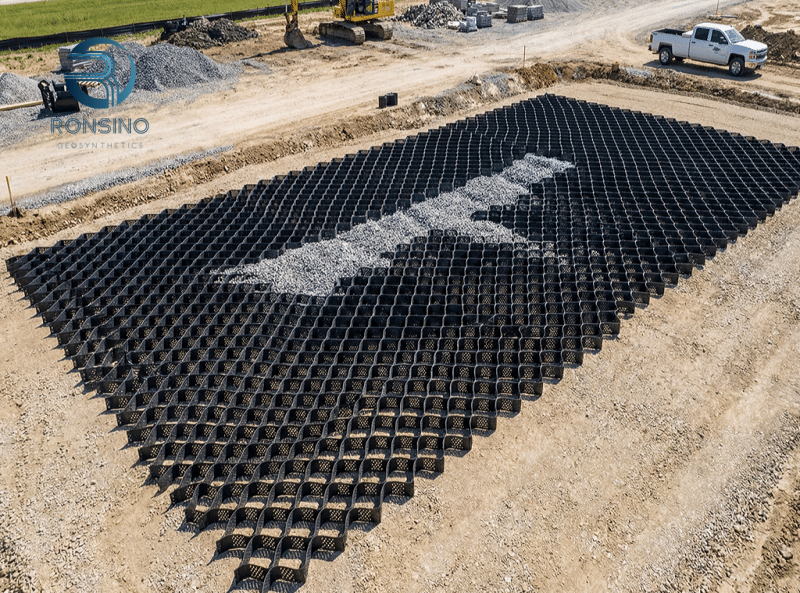
When choosing the best geocell for a project, you can't just choose it based on appearance. You need to understand the cost factors that affect the project budget. The price quoted is greatly affected by cavity size, material thickness, raw material composition, supplier pricing, etc. It is crucial to understand the core determinants of price. With the help of this guide, you can systematically sort out variables, compare plans, and make scientific decisions to ensure stable project performance and cost control.
1. What is Geocell?
Geocell represents a category of three-dimensional geosynthetic products crafted from high-molecular polymers, consisting of retractable and expandable panel structures that are broadly applied in subgrade reinforcement and erosion prevention projects. The core functional positioning of this geocell material lies in effectively blocking soil erosion and loss on sloped surfaces triggered by long-term scouring of runoff and persistent wind erosion, and it is designed with a uniformly distributed perforated structure during production, so as to achieve efficient discharge of seepage water and more convenient compaction operation of the internal filling materials. All connection nodes of this material are processed and fixed through an ultrasonic welding process in a standardized factory production environment, and the whole component which will form a regular honeycomb-shaped cell structure after being fully unfolded is transported to the construction site in the form of folded strip units.
2. Working Principles of Geocell
Geocell, a 3D honeycomb material, stabilizes and reinforces weak foundations (e.g., road embankments, landslide mitigation, retaining walls, protective fences). Its grid structure aids drainage, improves load distribution, and prevents soil displacement/erosion by confining fill in interconnected compartments, minimizing material loss. It enables eco-friendly construction (e.g., soil on vegetation-free rock) and boosts load-bearing capacity. Flexible to fit uneven terrain, it ensures long-term stability and reduces maintenance costs. Durable and environment-resistant, it’s effective in civil engineering and landscape projects, offering an economical, efficient, sustainable solution for soil performance under challenging conditions.
3. What are the Factors Affecting the Geocell Price?
Geocell pricing is based on total surface area (in m²) when fully expanded. The final cost is determined by three key dimensional parameters: stretched width, extended length, and individual cell height.
3.1 Types and prices of geocell materials
Raw material expenditure is a core determinant of a geocell quote. Commonly used raw materials are HDPE and PP, with significant differences in performance and cost: HDPE has better tensile strength and corrosion resistance, is suitable for heavy-duty scenarios such as highways and railway subgrades, and has a higher price; PP is lighter and more flexible, suitable for slope greening and landscape projects, and has lower costs. If special projects require customized performance, manufacturers may choose modified materials or qualified recycled materials, and the price will be adjusted according to the material.
3.2. Different geocell specification different geocell price
Geocell Height: such as 50mm, 100mm, 150mm, etc. The larger the height, the more material used and the higher the price.
Welding distance (welding point spacing):The shorter the interval between adjacent welding points, the greater the structural stability of the geocell, but this also complicates production and increases the final market price.
Thickness: Usually measured in millimeters(mm), increasing thickness enhances compressive strength but also increases geocell price.
3.3. Geocell Surface treatment
Textured surface treatment: By raising the surface friction coefficient to enhance the anti-skid performance, this approach is well suited for the reinforcement construction of steep slopes, yet the corresponding processing technology will drive the overall cost up by 10 percent to 20 percent.
UV Stabilized: Adding UV light inhibitors greatly improves materials' outdoor durability, particularly for long-term exposed applications, but these specialized formulations are generally costlier than standard ones.
Other functions, such as antioxidant and acid alkali resistant coatings, will incur additional costs.
3.4. Different brands and origins result in varying prices for geogrids
Global renowned brands like Tensar and Presto Geosystems are far pricier than domestic suppliers, mainly due to their technological patents and strict quality control. Imported goods also incur extra costs including tariffs and shipping fees. By contrast, domestic products have price advantages, but their quality consistency needs careful oversight.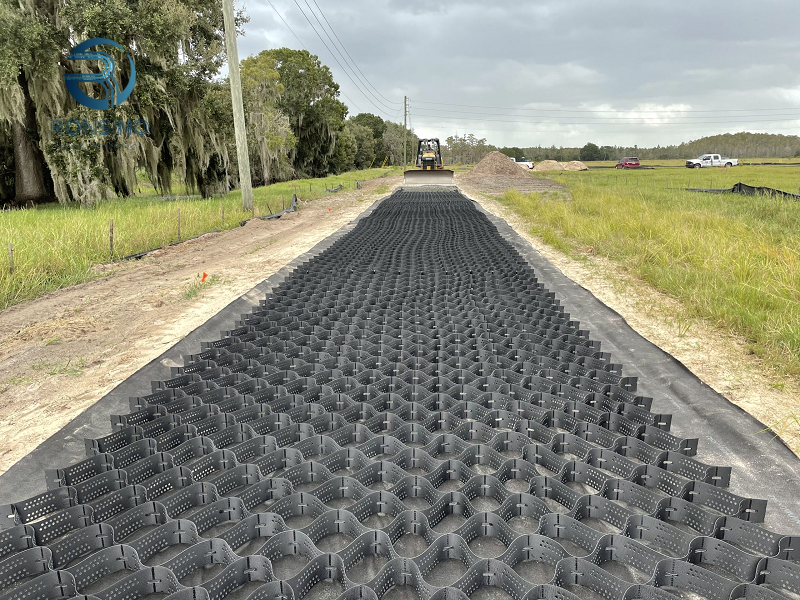
4. Application Scenarios and Geocell Price Correlation
Geocell pricing varies significantly depending on the application scenario. Different engineering projects have different requirements for material performance, specifications and procurement methods, which directly affect the final procurement cost. Choosing a geocell that suits the actual needs of the project can improve both construction efficiency and economic benefits.
4.1 Infrastructure Construction (e.g., Road and Railway Reinforcement)
Take large-scale construction like highways and railways: they need geocell solutions with robust structural integrity. These cellular systems must withstand intense vehicular pressure, cyclical mechanical strains, and prolonged fatigue—only this ensures decades of service life and stability. High-Density Polyethylene (HDPE) is preferred for its exceptional tensile strength and chemical resistance. Material thickness meets or exceeds millimeters, often with UV stabilization to shield against solar damage and environmental wear. Though these strict specs lead to complex manufacturing and lower output, they are indispensable for critical projects' enduring dependability.
4.2 Civilian Projects (e.g., Courtyard Greening, Parking Lots)
Conversely, civil construction and landscaping projects have low load-bearing demands. Pavement, lawns, or covered parking often use Polypropylene (PP) geocells (0.8–1.2 mm thick), which offer sufficient performance. These geocells are mainly for soil stabilization, erosion control, or aesthetics, lacking heavy-duty specs for major infrastructure. Their surface can remain untreated, reducing unit costs. Thus, PP geocells balance cost and function in light-load scenarios, exemplifying efficiency.
5. Project Scale Affects the Geocell Price
Wholesale procurement: The larger the quantity, the lower the unit price.
Retail procurement: For small-scale orders (e.g. 1,000 square meters), pricing follows retail standards. Due to high wastage in small-batch production and logistics, their unit price is 20%-50% higher than that of large bulk orders.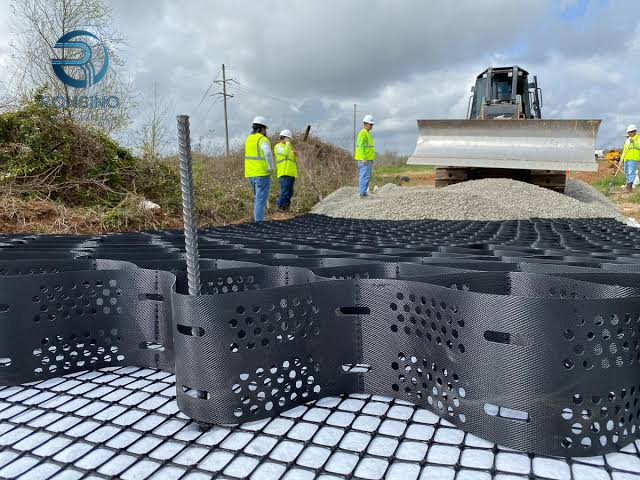
6. Market Price Trends Affect the Geocell Price
6.1 Raw material fluctuations
Geocell manufacturing uses HDPE and polypropylene, both petroleum-derived. As crude oil prices rise, polymer production costs follow. For example, in 2022, crude oil surged 40% year-on-year, driving HDPE prices from 8,000 to 12,000 yuan per ton, raising geocell production costs by 15–20%.
6.2 Regional market differences
Asian market:Countries such as China and India have strong manufacturing capabilities, and companies (such as a manufacturer in Tai'an, Shandong) have obvious pricing advantages. However, access to the European and American markets is difficult due to the additional tariffs of 20%-30%.
7. Procurement Channels and Cost Optimization
7.1 Direct manufacturer procurement
Advantages: Transparent price (no middleman markup), customizable specifications (such as special welding distance), strong technical support.
Disadvantages: High minimum order quantity (usually starting from 5000 sqm), long delivery time (15-30 days).
7.2 Distributor Agent
Advantages: Small batch flexible procurement, fast spot supply (3-7 days), and localized services (such as installation guidance).
Disadvantage: Price increase of 10% -20%, and there may be outdated inventory.
Traditional supply chain: Obtaining stable prices through long-term cooperation, but with low flexibility.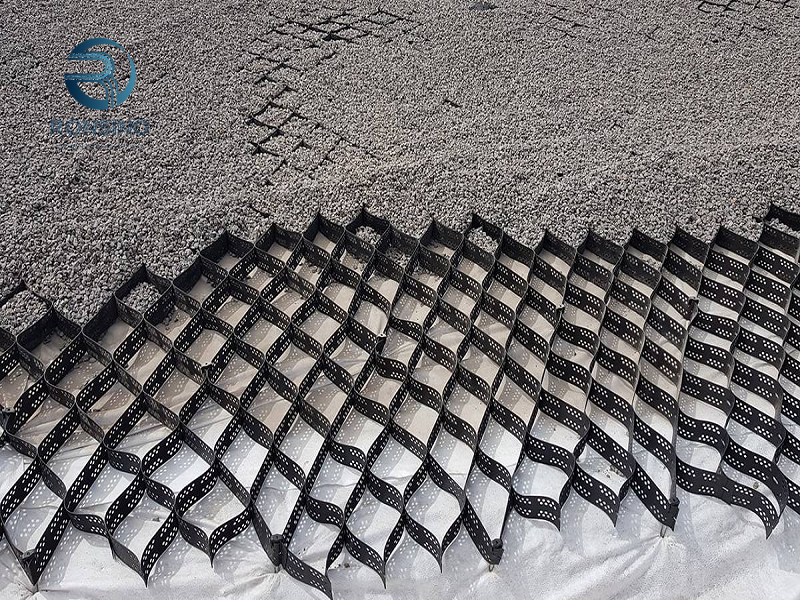
Conclusion
Geocell is a key material in modern civil engineering, and its price advantage improves economic efficiency. Domestic manufacturers represented by RONSINO Geosynthetics rely on large-scale production and technological breakthroughs to make HDPE geocell costs 20%-30% lower than international counterparts, providing a more economical choice for various projects. Its cost advantage extends throughout the entire supply chain of manufacturing, logistics and construction. At present, infrastructure funds are increasing but financial constraints are limited. The higher cost performance of domestic geocells makes them an ideal choice for large-scale projects such as highways, railways, and water conservancy. Companies such as RONSINO have further consolidated their price advantages by optimizing production and on-site support, helping domestic projects obtain reliable geosynthetic materials at a lower cost. In the future, as production technology advances and market competition intensifies, geocell's cost advantage will become more significant, creating greater value for the civil engineering industry.