A Comprehensive Guide to Selecting the Ideal HDPE 30 mil Geomembrane
Blog · 2026-08-07 · 0 views
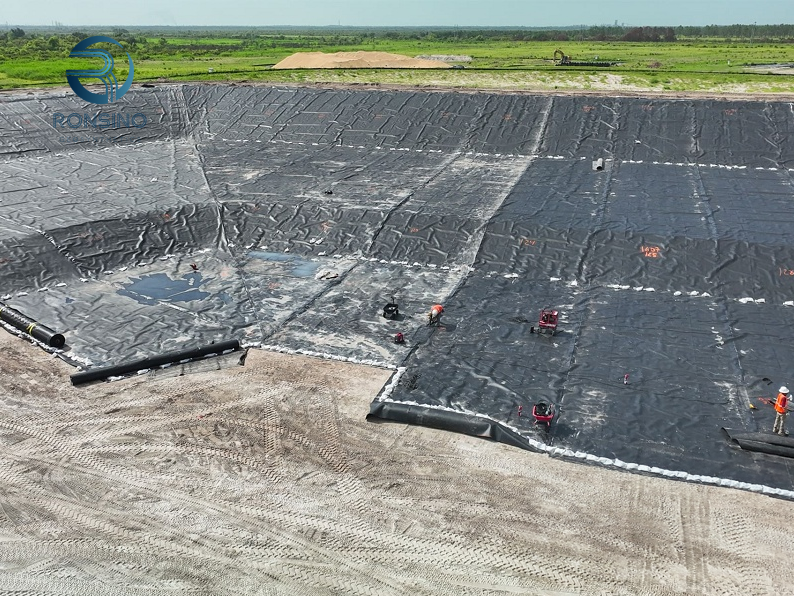
Geomembrana de polietileno de alta densidad (HDPE) de 30 milésimas de pulgada constituye una barrera impermeable de espesor nominal de 0,75 milímetros, desarrollada exclusivamente para sistemas de contención ambiental en estanques, rellenos sanitarios, lagunas de aguas residuales y instalaciones mineras.
Technical Parameters and Specifications
Choosing the appropriate geomembrane HDPE 30 mil necessitates a thorough comprehension of its technical characteristics and adherence to established industry benchmarks for containment applications within civil engineering ventures.
Structure and Material Composition
The effectiveness of a 30-mil high-density polyethylene geomembrane is fundamentally governed by its unique polymer blend and intricate architectural framework.
HDPE Base Resin – Provides the core impermeable structure and chemical resistance.
Carbon Black Additives – Protect the membrane against ultraviolet radiation.
Antioxidants – Prevent thermal oxidation during manufacturing and long-term service.
Processing Stabilizers – Maintain material consistency during extrusion.
Optional Textured Surface – Improves friction performance on slopes and embankments.
These components ensure long-term containment performance in demanding environmental conditions.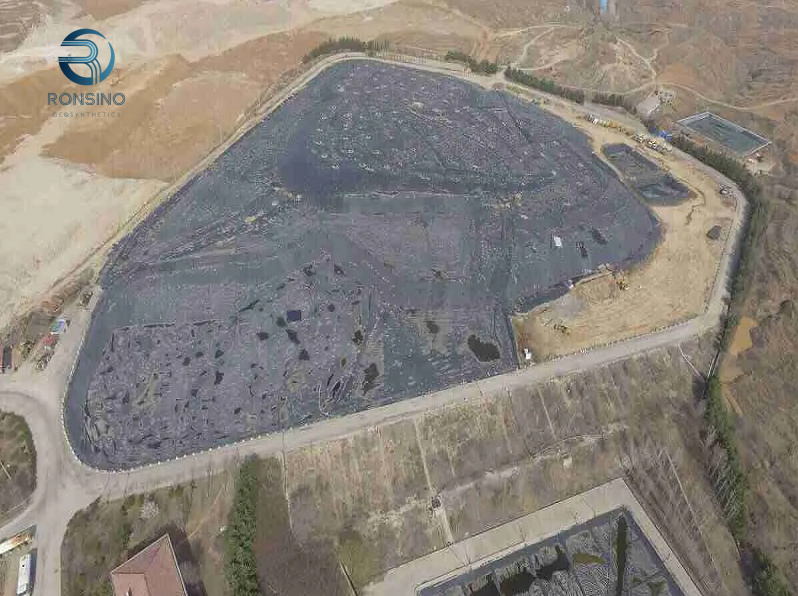
Geomembrane fabricada con polietileno de alta densidad (HDPE) de 30 milésimas de pulgada se obtiene mediante un procedimiento de fabricación por extrusión controlada, concebido para garantizar un espesor uniforme y una resistencia mecánica óptima.
Step 1: Raw Material Blending
HDPE resin pellets are blended with carbon black and stabilizing additives using automated mixing systems.
Step 2: Polymer Melting
The blended material is fed into a high-temperature extrusion system where it is melted and homogenized.
Step 3: Sheet Extrusion
Molten polymer is forced through a flat die to form a continuous geomembrane sheet.
Step 4: Thickness Calibration
Cooling rollers stabilize sheet thickness to maintain consistent 30 mil specifications.
Step 5: Surface Texturing (Optional)
Embossing rollers create textured surfaces when higher friction is required for slope stability.
Step 6: Quality Inspection
Finished rolls are tested for tensile strength, carbon black dispersion, and thickness tolerance before shipment.
Application Scenarios
Geomembrana HDPE 30 mils is widely used across multiple containment and environmental protection projects.
Agricultural irrigation ponds
Wastewater treatment lagoons
Industrial evaporation ponds
Aquaculture and fish farming ponds
Secondary containment for chemical storage
Stormwater retention reservoirs
Common project participants encompass engineering-procurement-construction firms, ecological specialists, public works authorities, and geosynthetic suppliers.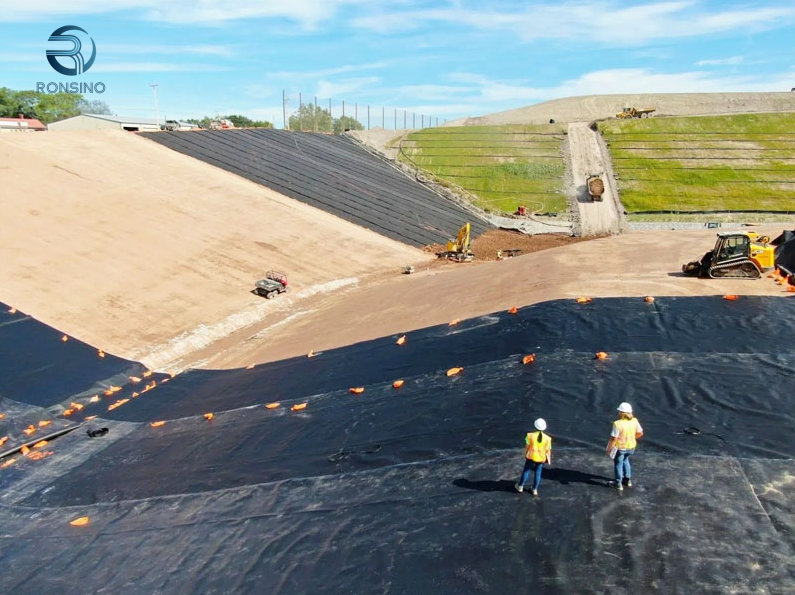
Core Problems and Engineering Solutions
Puncture Damage During Installation
Install non-woven geotextile protection layers beneath the liner.
UV Degradation Over Time
Ensure the geomembrane contains certified carbon black additives.
Seam Leakage
Use hot wedge welding combined with vacuum testing to ensure seam integrity.
Slope Sliding Issues
Select textured geomembrana HDPE 30 mils for improved friction performance.
Risk Warnings and Prevention Recommendations
Improper installation or incorrect liner selection can lead to containment failure and environmental risk.
Always conduct a subgrade inspection before installation.
Avoid installing liners on surfaces with sharp rocks or debris.
Follow standardized geomembrane welding procedures.
Perform seam testing during installation.
Store liner rolls away from direct sunlight before installation.
Procurement and Selection Guide
Choosing the right geomembrana HDPE 30 mils requires systematic evaluation from an engineering and procurement perspective.
Identify the containment application and liquid characteristics.
Confirm whether 30 mil thickness is sufficient for puncture resistance.
Evaluate compliance with international geomembrane standards.
Review manufacturer testing reports and quality certifications.
Consider installation conditions such as slopes and subgrade roughness.
Request product samples and laboratory testing documentation.
Verify supplier capability for large-scale project delivery.
Engineering Case Study
A municipal wastewater treatment plant necessitated a protective barrier for a sixty-thousand-square-meter pond network engineered to hold processed wastewater prior to release.
Professionals opted for a 30-mil high-density polyethylene geomembrane, prioritizing its exceptional cost-efficiency by harmonizing robust longevity with streamlined installation procedures.
The engineered system incorporated a permeable geotextile barrier and dual-channel weld technology for joint fabrication. Following half a decade of continuous service, the containment facility maintains its integrity with no observed seepage or deterioration of its foundational components.
Frequently Asked Questions (FAQ)
1. What does 30 mil thickness mean?
It represents a thickness of approximately 0.75 mm.
2. Is 30 mil geomembrane suitable for ponds?
Yes, it is commonly used for irrigation and aquaculture ponds.
3. How long can HDPE 30 mil liners last?
Typical service life ranges from 20 to 30 years.
4. Is HDPE resistant to chemicals?
Yes, HDPE has excellent resistance to most industrial chemicals.
5. Can geomembrane liners be repaired?
Yes, damaged areas can be repaired using extrusion welding techniques.
6. Are textured liners necessary?
They are recommended when installing on slopes.
7. What welding method is used?
Hot wedge welding and extrusion welding are commonly used.
8. Do liners require protective layers?
Yes, geotextile layers help prevent puncture damage.
9. What roll sizes are typical?
Standard rolls are often 6–8 meters wide depending on manufacturer.
10. Is HDPE liner environmentally safe?
Yes, it is widely used in environmental containment systems.
Request Technical Data or Quotation
If you are evaluating geomembrana HDPE 30 mils for an engineering project, technical documentation and material testing are critical for procurement decisions.
Technical specification sheets
Laboratory testing reports
Material samples for evaluation
Project-specific pricing quotations
Contact our engineering team to request detailed technical information, project consultation, or commercial quotations for large-scale geomembrane supply.
Author Expertise (E-E-A-T)
Written by a team of senior engineers, the team members have more than fifteen years of experience in the fields of landfill, mining, wastewater treatment and environmental protection infrastructure.