How to Choose a Geocell?
Blog · 2026-06-02 · 0 views
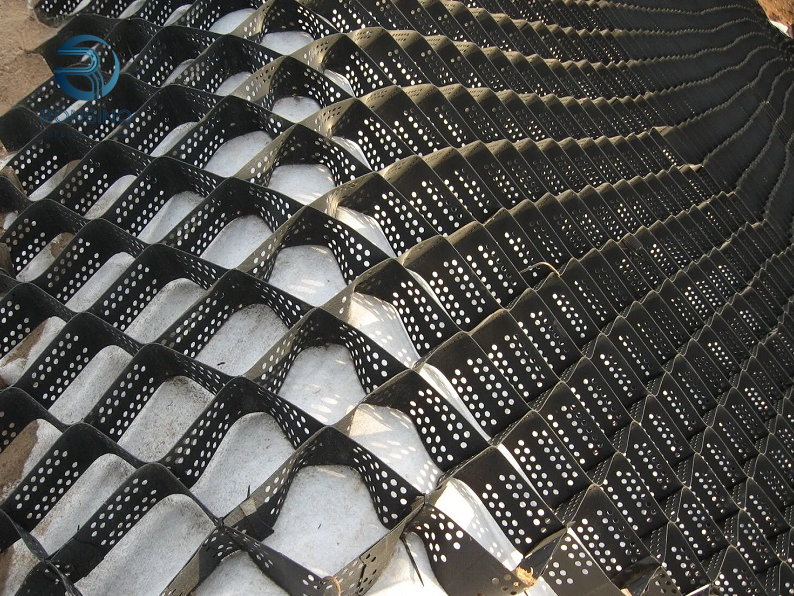
Behind heavy-duty highways, anti-slip slopes, railway foundations, water and soil protection and other projects, there is an indispensable but often overlooked technology: geocells. This three-dimensional honeycomb cell constraint system is a revolutionary breakthrough in geotechnical engineering, which can transform low-bearing capacity soft soil into reliable and efficient structural components with excellent load distribution.Selecting the appropriate geocell is a core strategic decision in engineering design, which directly determines the project life, full-cycle cost, operational safety and ecological protection effectiveness. This guide sorts out the core evaluation dimensions, key technical parameters, and scenario application details of selection to help you match a solution that meets your project needs.
1. Understanding Geocell Fundamentals
Fundamentally, a geocell is a polymer-based (occasionally textile-derived) interconnected grid constructed from linked strips or panels, which is unfolded and expanded at the construction site to create a malleable, three-dimensional honeycomb-shaped cellular framework. After being packed with densely compacted soil, crushed stone aggregate, fine sand, or flowable concrete, these enclosed cellular units form a robust mechanically stabilized layer (MSL) that provides the following functional advantages:
Confines Infill: Effectively stops the horizontal displacement of filling materials when subjected to external loads, and notably improves their shear resistance and load-bearing performance.
Distributes Loads: It disperses vertical loads across a broader range of the base structure, effectively lowering the stress exerted on the subsoil layer beneath and greatly reducing the occurrence of uneven subsidence.
Provides Erosion Control: Protects slopes and channels from surface runoff and wind erosion by anchoring soil and vegetation.
Improves Drainage: Helps achieve regulated water discharge in the infill aggregates, avoiding water accumulation which undermines the stability of underlying roadbeds.
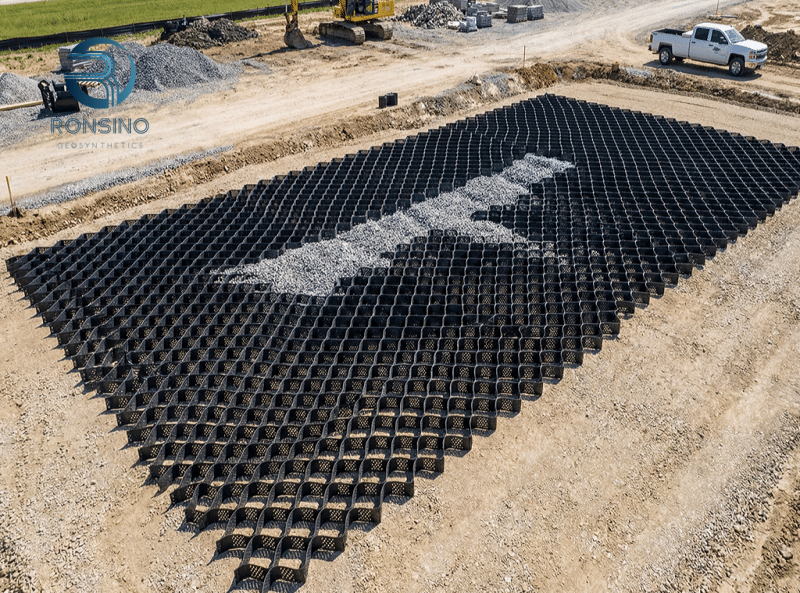
RONSINO Cellular Confinement System Geocell Price
HDPE Gravel Grid Best Geocell for Road Soil Stabilization
2. The Crucial Selection Criteria: Decoding Best Geocell Performance
Selecting the “best” geocell essentially depends on the specific application. System configurations suitable for heavy-duty transportation on soft clay soils will have significantly different parameters than those designed for vegetated slopes or channel linings. Here is the core framework to follow when conducting an assessment:
2.1 Best Geocell – Material Composition & Properties: The Foundation of Durability
2.1.1 Polymer Type:
High-density polyethylene (HDPE) is the most widely used geosynthetic base material with outstanding comprehensive properties. It has excellent chemical corrosion resistance, strong UV resistance and stability after modification, is not easy to age after long-term outdoor use, has long life and good durability. This material is suitable for conventional bearing, slope soil and water conservation, soil support and other projects. It has a good balance between strength and toughness and strong adaptability.
PP (Polypropylene): This material is frequently deployed in scenarios that prioritize flexibility as a core requirement, as well as in operating conditions with sustained low temperatures. It typically exhibits better pliability than high-density polyethylene (HDPE), though when compared to HDPE that is produced with a rigorously optimized formulation, it usually demonstrates weaker resistance to ultraviolet radiation and less satisfactory performance against long-term creep deformation. It is widely utilized in scenarios involving light-load use cases or short-term, non-permanent installation projects.
Polyester (PET) Geotextile-Based: Geotextiles made using woven or non-woven processes are bonded to form honeycomb structural units. This material performs well in slope vegetation establishment (can effectively enhance the root consolidation ability), and also has excellent filtering and isolation functions. If it is not fully filled, its load-bearing capacity is relatively limited and is not suitable for high-intensity load scenarios. The product has outstanding tensile strength properties.
Novel Polymeric Alloys (NPA) / Enhanced Polymers: Specially formulated composite blends offer outstanding performance benefits: higher structural rigidity, better UV resistance, more reliable low-temperature operational stability, and improved tolerance to specific corrosive chemicals. These materials are widely used in harsh working conditions, heavy-load scenarios, and key infrastructure projects with strict performance requirements.
2.1.2 UV Stabilization (Critical!)
Prolonged exposure to ultraviolet radiation accelerates the deterioration of polymeric materials. It is essential to select geocells that incorporate a carbon black masterbatch at a concentration of no less than 2-2.5%, ensuring even dispersion throughout the polymer matrix rather than mere superficial application. Furthermore, one must confirm that the product offers a certified ultraviolet-resistant service life of, for instance, 20 years or more, supported by rigorous testing protocols aligned with industry benchmarks such as ASTM D7238 or ISO 4892.
2.1.3 Additives:
Antioxidants can effectively delay the oxidative decomposition process of materials. Other additives can improve specific performance indicators, such as flame retardancy and color expression.
2.1.4 Creep Resistance:
The tendency of polymers to slowly deform over time under constant load is critical to structural integrity under sustained loading over long periods of time. High-density polyethylene generally exhibits better creep resistance than polypropylene; it is recommended to refer to the specific performance data of relevant materials in sustained load tests for further evaluation and selection. (e.g., ISO 13426 or similar).
2.2 Best Geocell – Structural & Physical Specifications: Measuring Performance
2.2.1 Seam Strength (Peel & Shear):
The weakest link in a material assembly is usually a weld or joint between adjacent strips. Peel strength quantifies the ability of a seam to resist separation when forces are applied perpendicular to its direction. In contrast, shear strength evaluates the ability of a joint to resist displacement when forces are applied in parallel directions. Commonly used evaluation standards include ASTM D882 for tensile properties, and adapted test methods such as the ISO 13426 standard. Demand high minimum values (e.g., > 200 N/50mm peel, > 300 N/50mm shear) suitable for your load requirements.
2.2.2 Tensile Strength (Strip/Sheet):
Strength of the individual material in the machine and cross-machine directions (MD & CMD). While important, seam strength is often the limiting factor. ASTM D6693 (for polymers) or D4595 (for geotextiles).
2.2.3 Perforations:
Ensuring smooth drainage and root penetration is critical in vegetated applications. The size, arrangement and density of holes directly affect drainage efficiency and the retention ability of the filling. It is necessary to ensure that the opening design does not weaken the stability of the overall structure.
2.2.4 Cell Size (Depth & Diameter):
Defines the effective confined space of the geocell system and plays a key role in determining the optimal thickness of the load-spreading cushion layer. Geocells with greater depth specifications (150mm, 200mm, 300mm and above) are required for scenarios bearing higher static or dynamic loads, or for construction sites with lower subgrade bearing capacity. The internal aperture size of the geocell directly decides whether the selected infill particles can be properly filled and locked within the cell structure without obvious segregation or displacement.
2.2.5 Cell Geometry:
When compared to circular contours, rhombus-shaped structures typically deliver a more effective interlocking effect with angular filling materials. The density of welding spot arrangement also exerts a notable influence on the effect of constraint implementation.
2.2.6 Aperture Stability:
The ability of the cell wall to maintain its shape and resist buckling deformation under the action of filling pressure and external loads. This characteristic is closely related to the stiffness of the material and the welding strength.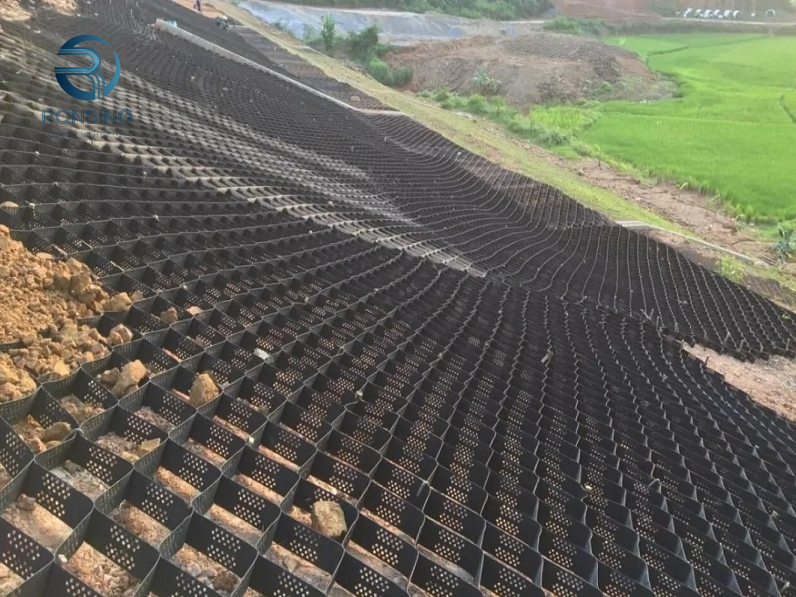
3. Application Requirements: Matching Best Geocell to Function
3.1 Best Geocell – Primary Function:
Load Support (Roads, Working Platforms, Foundations): Demands superior seam bonding strength, outstanding long-term creep resistance, stable anti-ultraviolet performance, as well as properly matched cell depth and structural stiffness. High-density polyethylene (HDPE) or Nylon Polyamide (NPA) materials demonstrate exceptional performance in meeting these requirements.
Slope Protection & Erosion Control: Robust containment is essential for soil and vegetation, alongside UV resistance and, in specific geotextile applications, significant tensile strength to ensure secure anchoring. Strategically placed apertures are crucial for facilitating effective water drainage and promoting healthy vegetation growth. High-density polyethylene (HDPE) and various geotextile materials are widely utilized for these demanding requirements.
Earth Retention (Gravity Walls, Embankments): Possesses extraordinary resistance to seam failure and tensile rupture, coupled with remarkable rigidity and extended service life. Deeply structured cellular configurations and resilient polymeric materials, specifically high-density polyethylene (HDPE) and non-polyolefin alternatives (NPA), are indispensable.
Channel Protection: Must withstand the erosive forces of moving water, exhibit resilience to surface wear, and maintain steadfast attachment to the underlying structure.
Tree Root Protection: Moderate tensile strength and apertures are required to facilitate root penetration and moisture exchange. Suitable materials include geotextiles or lightweight high-density polyethylene.
Design Loads: Quantify the expected traffic loads (ESALs – Equivalent Single Axle Loads), static loads, or hydraulic forces. This drives the required geocell strength, stiffness, and infill specifications.
3.2 Best Geocell – Subgrade Conditions:
The strength (CBR – California Bearing Ratio) and nature (clay, silt, sand, peat) of the underlying soil dictate the necessary improvement factor the geocell layer must provide.
3.3 Best Geocell – Environmental Exposure:
The selection of appropriate materials is significantly affected by a multitude of environmental and operational challenges, including solar radiation levels, severe thermal fluctuations, contact with aggressive substances such as ice-melting compounds, petroleum-based products, and corrosive acids or bases, living organisms, and the ever-present threat of combustion hazards.
3.4 Best Geocell – Infill Material:
The geocell must effectively confine the chosen infill (soil, aggregate type/size, sand, concrete). Cell size must accommodate infill particle size. Angular aggregate provides the best mechanical interlock.
3.5 Best Geocell – Design Life:
Temporary construction mat vs. 50+ year permanent infrastructure? Impacts required durability (UV, chemical, creep).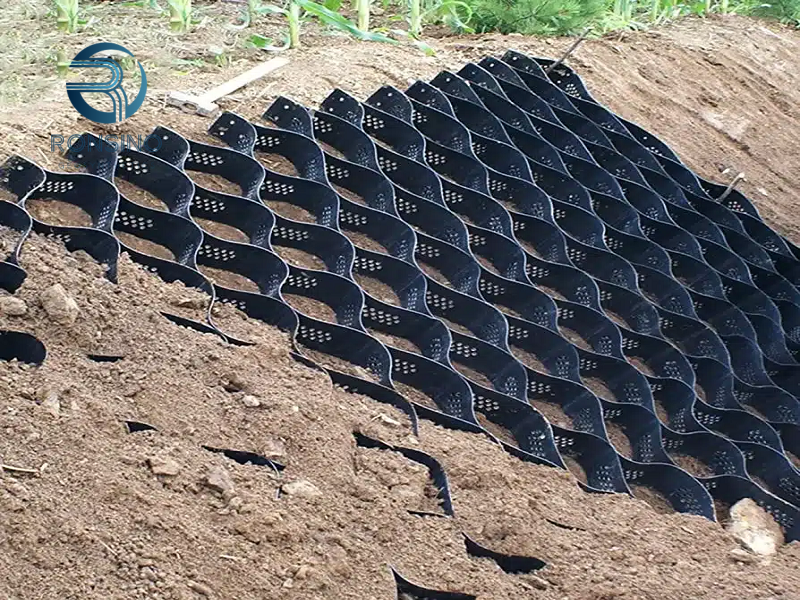
4.Installation Considerations: Ensuring Performance in the Field
Ease of Expansion: Can the panels be expanded easily and safely by the available crew? Do they lock open reliably?
Connection System: What methods are employed for joining individual components? Mechanical fasteners, interlocking designs, binding straps, or fused techniques each differ in assembly efficiency, stability, and robustness. Verify that the chosen method guarantees uninterrupted integration.
Anchoring: Critical for slopes and channels. Adequate anchors (steel pins, stakes, deadman anchors) of correct length and spacing are essential and often specified by the design engineer.
Infilling & Compaction: Ensuring the precise distribution and thorough consolidation of infill material within every individual cell is absolutely critical. Inadequate compaction renders any potential advantages completely ineffective. The specific technique employed—whether manual labor or mechanized processes—must be carefully chosen based on project accessibility and the overall magnitude of the work involved.
5. The Triple-A Evaluation Framework: Application, Attributes, Assurance
Synthesize the above factors using this decision-making framework:
Application: Precisely define the project’s geotechnical challenge (e.g., “stabilize soft subgrade for 10-tonne forklift traffic,” “protect 45-degree slope from erosion with vegetation,” “create durable access road over peat”).
Attributes: Based on the Application, list the required geocell attributes (e.g., HDPE, 200mm depth, min. peel strength 250 N/50mm, UV 20yr, perforated, high creep resistance).
Assurance: Demand proof! Require comprehensive, certified test reports (from accredited labs like ISO 17025) for all claimed properties (seam strength, tensile, UV, creep, carbon black content). Reputable manufacturers provide these readily. Verify warranties align with claimed lifespan.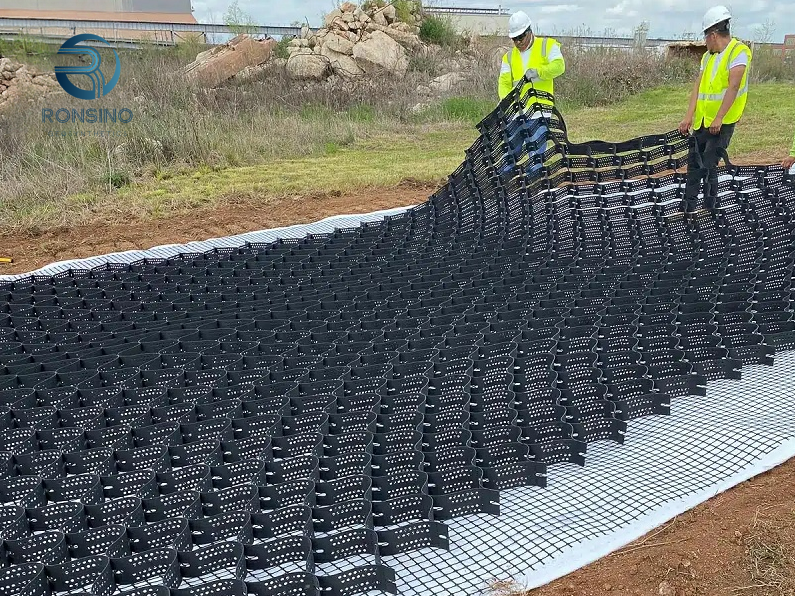
6.Beyond Specifications: The Value Proposition
While initial cost is a factor, the true value lies in lifecycle cost savings and risk mitigation:
Reduced Infill Requirements: Achieve equivalent performance with less imported aggregate.
Faster Construction: Geocells frequently facilitate building on unstable grounds without extensive earth substitution or additional weight application.
Extended Service Life: Durable geocells significantly reduce maintenance costs and downtime.
Environmental Benefits: Minimize excavation, reduce aggregate quarrying/transport, facilitate vegetation growth, and protect soil/water resources.
Accessibility: Enable construction in previously inaccessible or challenging terrain.
Predictable Performance: Engineered systems provide reliable, quantifiable improvement.
Custom Green Best Geocell for Road Construction
Plastic Geocell for Runway
7. Future Trends: Innovation in Cellular Confinement
The geocell market continues to evolve:
High-Performance Polymers: Enhancement of polymeric materials exhibiting superior tensile properties, rigidity, and durability against harsh environmental conditions.
Sustainable Materials: Exploration of recycled content and bio-based polymers (though performance and longevity remain key hurdles).
Smart Geocells: Integration of sensors for monitoring strain, temperature, or moisture within the structure.
Hybrid Systems: Combining geocells with other geosynthetics (geogrids, geotextiles) for optimized performance in complex scenarios.
Advanced Manufacturing: Enhanced uniformity in welding and joining methodologies, alongside groundbreaking advancements in cellular configurations.
8. Conclusion: Choosing Wisely for Lasting Success
Selecting the appropriate geocell is a critical engineering decision that requires a thorough evaluation. There is no absolute “best” choice and the most suitable solution should match the specific application, environmental conditions and performance standards. Proven reliability should be prioritized rather than focusing solely on cost. Carefully examine material properties, request empirical data, understand installation specifications, and work with industry experts.
Through the diligent implementation of the methodologies detailed in this handbook—emphasizing the core aspects of Material Composition, Load-Bearing Capacity, Tailored Functionality, and Flawless Execution—you equip yourself to fully leverage the capabilities of geocellular systems. The outcome will be a superior, economical, and ecologically responsible framework that ensures unwavering service for many years, establishing the durable groundwork upon which lasting civil projects are established. Devote the necessary effort to careful deliberation during the initial phase; the terrain you reinforce will prove its enduring value for a long time ahead.Should you require any clarification, do not hesitate to reach out to the team at RONSINO.