What is Geotextile Fabric Used for?
Blog · 2026-01-06 · 0 views
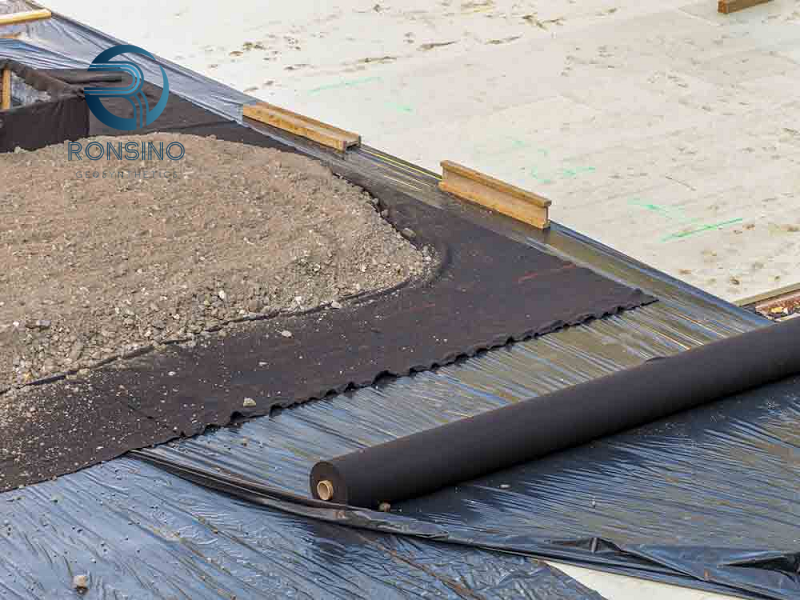
Geotextile Fabric is a single-use geosynthetic material known for its filtration, drainage, and separation properties. Highly permeable, it traps soil particles, reducing erosion and enhancing ground stability, making it vital across industries. In civil engineering, it reinforces slopes and embankments by evenly distributing loads. Environmental projects use it for wastewater purification and landfill seepage control. Agriculture benefits from optimized irrigation, as geotextiles retain soil moisture and reduce water loss. Its versatility and durability make geotextile fabric essential for modern infrastructure and ecological conservation. Advances in geotextile filter cloth technology continue to drive sustainable innovations aligned with global environmental goals.
1. Geotextile Fabric Definition & Key Characteristics
1.1 The Definition of Geotextile Fabric
Geotextile filtration fabric, commonly referred to as geotextile material, is an engineered permeable synthetic fabric with specialized biological compatibility. This innovative textile is meticulously crafted to perform multiple functions—including separation, filtration, reinforcement, protection, and drainage—when integrated with soil systems. In drainage applications specifically, geotextiles facilitate efficient water passage while effectively retaining soil particles to prevent displacement and system blockages. These fabrics are typically manufactured from high-performance polymers such as polypropylene or polyester and are produced in both woven and non-woven configurations for diverse engineering needs.
1.2 Key Characteristics of Geotextile Fabric
1.2.1 Filterability
- Core function: Enabling water to flow through while at the same time intercepting soil particles so as to do away with soil erosion.
- Application scenarios: Examples include drainage systems, gardens, and farmland where smooth water flow and soil stability are ensured so as to prevent erosion.
- Technical realization: The particle interception feature is achieved via the pore structure of the fabric whereby the pore size and distribution directly determine the filtration precision.
1.2.2 Permeability
- Water flow management: The high-flow design allows the water to drain safely, thus preventing structural or crop damage due to waterlogging.
- Engineering value: For instance in road-building and retaining walls construction, foundation stability is kept through the use of directional drainage.
- Performance index: Permeability indicates the level of resistance to water flow, which directly determines filtration efficiency and equipment productivity.
- Tensile properties: The use of high-strength materials (e.g. polypropylene, polyester) guarantees that the Geotextile Fabric will be able to withstand construction and long-term load stress.
- Durability: Long service life is ensured by the anti-tear and anti-puncture features which also allow the product to be used in complex geology.
- Structural stability: During the acupuncture operation the bonding between the fibers is strengthened, the non woven geo textile filter fabric retains its dimensional stability, and it becomes resistant to deformation and rupture.
1.2.4 Durability
- Environmental adaptability: The geo drainage fabric is fully equipped to face problems of chemical consumption, reaction to UV rays, biodegradation (e.g. mildew resistance) and is compatible with harsh climates type.
- Material selection: Man-made fibers (e.g. polypropylene) are better than the natural ones and are more resistant in severe conditions.
- Long-term benefits: The project benefits from the lower replacement rate, thus cutting down on lifecycle costs and boosting its economics.
1.2.5 Versatility
- Composite functions: The complete set of functions comprise the integration of separation, reinforcement, protection, drainage, and other functions to meet diverse engineering needs.
- Application areas: road construction (roadbed reinforcement), coastal protection (erosion prevention), environmental engineering (pollution control), etc.
- Design flexibility: Different scenarios can take advantage of the geo fabric filter by altering the material, thickness and weaving process to meet their requirements.
1.2.6 Environmental Protection and Economy
- Sustainability: Some geo fabric filter cloth products use recyclable materials to reduce environmental impact.
- Cost-effectiveness: Compared with traditional materials (such as sand and gravel filter layers), it is easy to install, has low maintenance costs, and has a high overall cost-effectiveness.
Summary Table: Woven VS Non-woven
Characteristic | Woven Geotextile | Non-Woven Geotextile |
Primary Use | Soil Stabilization, Separation | Drainage, Filtration, Protection |
Structure | Woven yarns (like a sack) | Needle-punched fibers (like felt) |
Permeability | Low | High |
Tensile Strength | Very High | Moderate to High |
Elongation | Low (5-25%) | High (50-80%) |
Puncture Resistance | Good | Very Good |
Typical AOS | Smaller openings | Larger openings (relative to type) |
2. Primary Applications of Geotextile Fabric
Geotextiles have many different practical uses. Below are the ones considered the most important of each function category.
2.1 Applications Focused on Filtration & Drainage
In these cases, it is the geotextile fabric's function to allow water to pass and to retain soil that is most important.
2.1.1 Behind Retaining Walls
This represents a common application scenario where geotextile fabric is installed as a separator between soil layers and gravel used for drainage backfill. This placement effectively blocks fine soil particles from infiltrating into pipes, preventing potential blockages that might disrupt water flow. Without this barrier, accumulated water pressure could compromise structural integrity, increasing the risk of wall collapse.
2.1.2 French Drains and Trench Drains
The non woven geotextile fabric is wrapped around a perforated pipe that is surrounded by gravel. It ensures that the soil around the pipe does not get into the gravel and the pipe, thus the drain remains functional for a long time.
2.1.3 Landfill Leachate Systems
Geotextiles geo fabric are employed to filter liquid (leachate) as it comes from the landfill so that fine particles of waste do not clog the drainage pipes.
2.1.4 Subsurface Drainage for Roads & Airfields
The installation of these things is done to remove water from a road base surface and to keep the base from getting weaker and saturated.
2.2 Applications Focused on Separation
At this point, the fabric serves as a layer that prevents the joining of the two separate soil layers beneath it.
2.2.1 Road and Parking Lot Construction
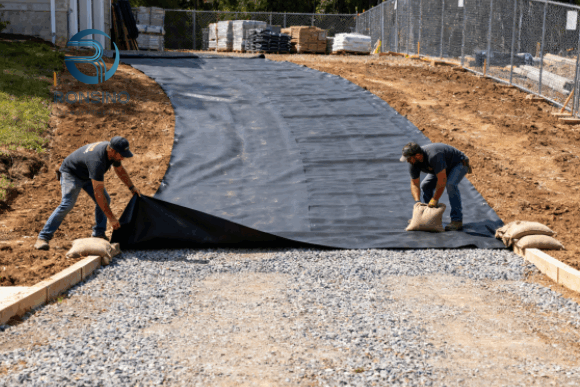
Non-woven geotextiles act as a durable barrier between unstable subgrade and crushed stone layers, preventing particle migration while allowing water drainage. These fabrics reinforce the structural interface, distributing stress to reduce settlement and rutting. Their filtration properties retain soil particles while permitting water flow, strengthening weak subgrades and preserving pavement integrity long-term.
2.2.2 Railway Bed Stabilization
It connects the ballast (crushed rock) with the underlayer soft soil, thus allowing the ballast to be free of soil, and it saves on maintenance and cleaning.
2.2.3 Underneath Riprap and Revetments
During the installation of the concrete (riprap) to the riverbanks for erosion control, a non woven landscape fabric is spread first. It prevents the soil from coming in contact with the rock and being washed away from under it, at the same time, providing water an outlet.
2.3 Applications Focused on Reinforcement
In such cases, the geofabric is being used for its tensile strength to hold extremally soft ground.
2.3.1 Embankments on Soft Soils
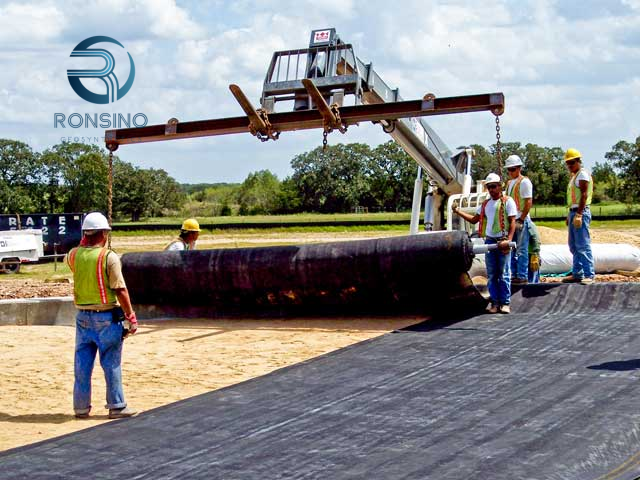
Geotextile materials may be of great help in such situations when building a road embankment over soft, weak ground. The geotextile can, layer by layer, distribute the load and provide the "mattress" effect, thus reinforcing and stabilizing the embankment.
2.3.2 Steep Slope Reinforcement
Geotextile drainage fabric have the ability to stabilize the soil on very steep slopes, thus limiting landslides and the loss of soil due to erosion.
2.4 Applications Focused on Erosion Control
2.4.1 Silt Fences
The ephemeral nature of this installation stands as its defining characteristic, yet it remains widely adopted in practical applications. At construction zones, permeable geotextile filtration material gets secured to timber posts, serving as an effective containment system. This specialized fabric intercepts turbid runoff while permitting water passage, facilitating sedimentation that purifies the liquid by removing suspended solids.
2.5 Applications Focused on Protection
2.5.1 Landfill Liners
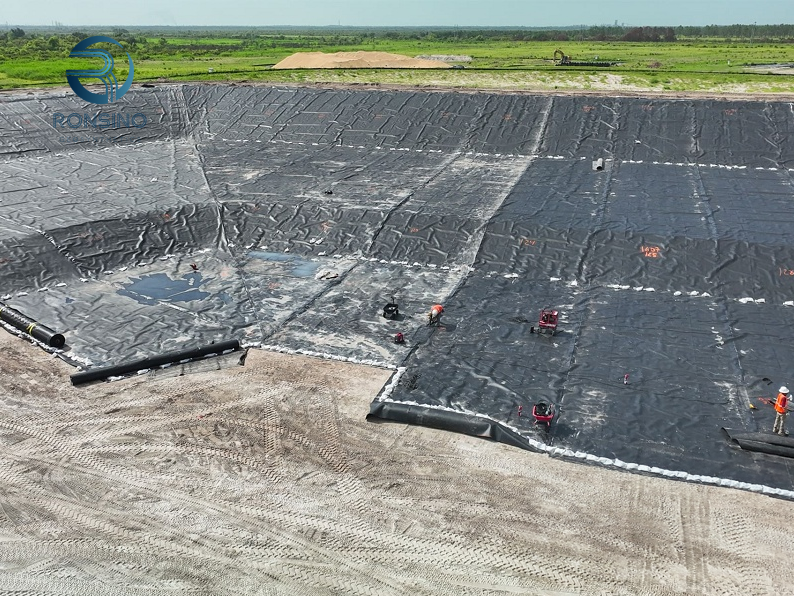
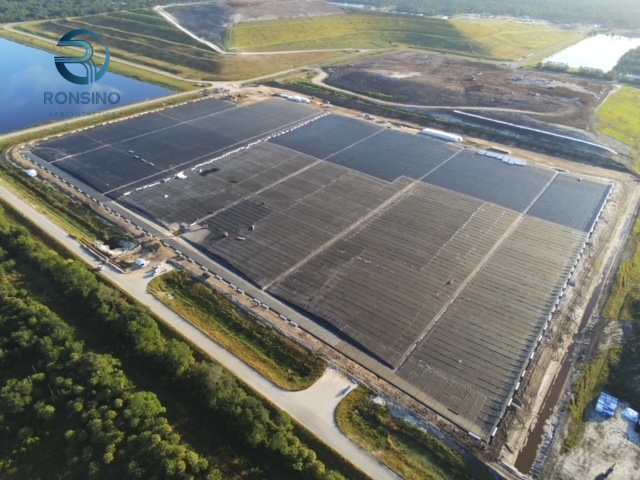
The most important point here is to keep the impermeable geomembrane liner, whose function is to prevent contaminants from leaking. Besides the liner, a film geotextile is used to protect from puncturing rocks, gravel present in soil, or waste.
Geotextile is an environmentally friendly engineering material that has functions such as drainage, filtration, isolation and reinforcement. It can effectively prevent water and soil erosion, increase the bearing capacity of the foundation, and is corrosion-resistant and durable, reducing project costs. Its three-dimensional structure can intercept soil particles and keep water flowing smoothly. Layered laying can improve the mechanical properties of the soil. The special formula makes it resistant to corrosion and aging. Compared with traditional materials, it can save 30%-50% of the cost, shorten the construction period by 40%, have a lifespan of 50 years and a recycling rate of over 80%. It is widely used in sponge cities, highways, mine reclamation and other fields to achieve a win-win situation for economy and environmental protection.
Application | Primary Function | Recommended Geotextile Type |
French Drains, Drainage Ditches | Filtration, Drainage | Non-Woven (High permeability allows easy water flow) |
Behind Retaining Walls | Filtration | Non-Woven (Excellent for retaining soil while draining water) |
Road & Parking Lot Base | Separation, Stabilization | Woven (High tensile strength and resistance to puncture) |
Under Riprap & Shorelines | Separation, Filtration | Heavy-Duty Non-Woven or Woven (High puncture resistance) |
Silt Fences (Erosion Control) | Filtration, Sediment Control | Non-Woven (Typically a lighter weight, economical fabric) |
Landfill Liner Protection | Protection, Cushioning | Non-Woven (Acts as a thick, protective cushion) |
If you have projects that call for top-notch Geotextile Fabric, The Best Project Material Co., Ltd.(RONSINO Geosynthetics)will be your dependable source of a wide range of high-quality products, such as non-woven and woven fabrics that are not only engineered to conform to international standards but also give excellent performance in a variety of applications. So, by selecting RONSINO Geosynthetics, you not only get the quality product, but you also get the professional support that your construction and infrastructure needs require.