80 mil Plastic Sheet for Landfill Project in Brazil
Case · 2025-12-22 · 0 views
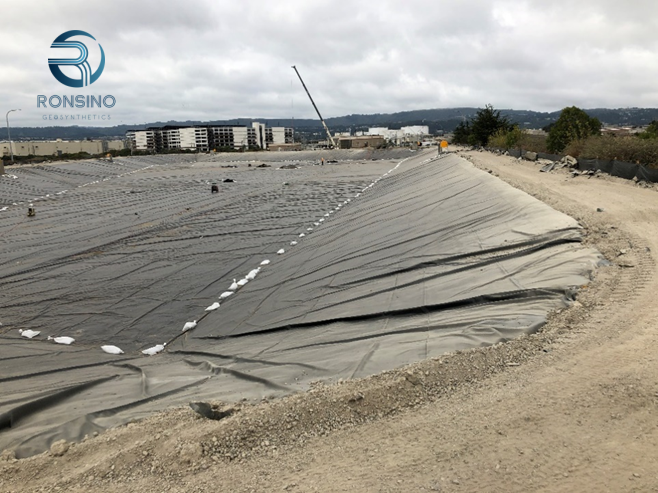
80mil plastic sheet (2mm HDPE geomembrane) is a geosynthetic liner, mainly made of high-density and medium-density polyethylene, and is commonly used in environmentally friendly landfills that comply with the national standard II. Although American Standard HDPE geomembrane is more stringent in specifications and raw material selection, most landfill projects still use American Standard performance as the benchmark. Compared with traditional geomembranes, this special landfill membrane has higher tensile strength, longer roll length, stronger acid resistance and longer service life.
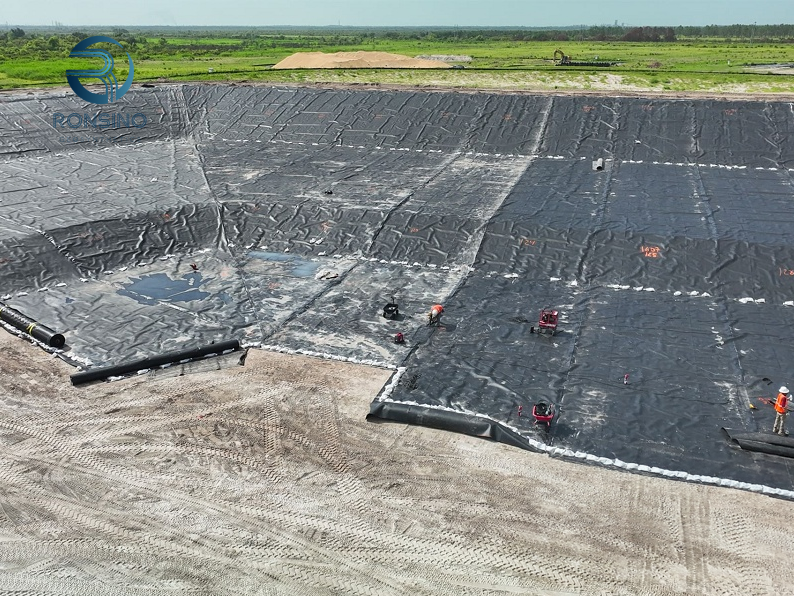
Geomembrane Installation Process in the Landfill Site
The geomembrane installation process is as follows: the dimensions of the designated area are inspected and accurately recorded, then the material is shipped according to dimensions. When laying, unfold from high to low, keeping a 5% margin to cope with settlement and stretching, and at the same time flatten the material to fit the terrain and avoid wrinkles. The edges need to be precisely aligned, the welded panels need to match exactly, and the overlap width is standardized to 15 cm.
CASE STUDY of 80 mil Plastic Sheet for Landfill Project in Brazil
Location :Brazil
Product(s) : 80 mil Plastic Sheet
Application : Landfill Project
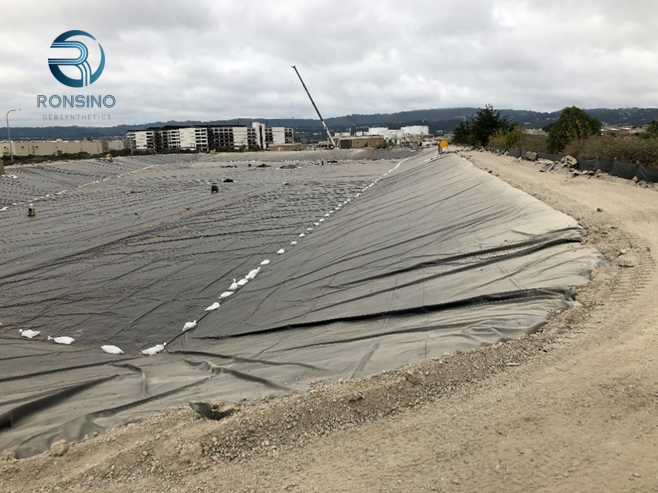
Why Chose 80 mil Plastic Sheet Brazil for Landfill Project
In modern society, effective household waste management is crucial. Robust disposal systems and strict waste segregation are essential for sustainable, eco-friendly operations. For non-degradable waste, proper landfill preparation is needed to prevent seepage and land contamination. Local authorities must enforce safeguards to mitigate these risks. By adopting advanced disposal and segregation methods, we can reduce environmental footprints, balance ecosystems, and create a cleaner, healthier future.
Solution of 80 mil Plastic Sheet for Landfill Project in Brazil
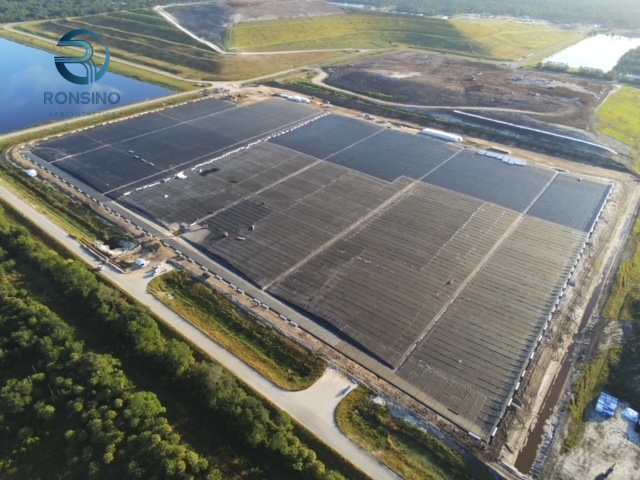
The impermeable geosynthetic liner employed in landfill sites significantly enhances environmental protection performance while ensuring superior containment capabilities, aspects that demand careful consideration. With increasing oversight from national environmental agencies and heightened public awareness of ecological preservation, 80-mil high-density polyethylene sheets have become the standard for sustainable waste management. The critical function of waste disposal facilities should never be overlooked. dating back to the late 20th century, impermeable membranes have been integral to landfill operations and are now widely utilized across various waste treatment and containment projects. The significance of these liners in landfill systems cannot be overstated, as they form the essential waterproof barrier for waste disposal sites. In a recent case involving a Brazilian municipal landfill project, our company recommended 80-mil HDPE sheets and provided comprehensive installation guidance through detailed video tutorials. The client expressed great satisfaction with both the product quality and our professional support services.
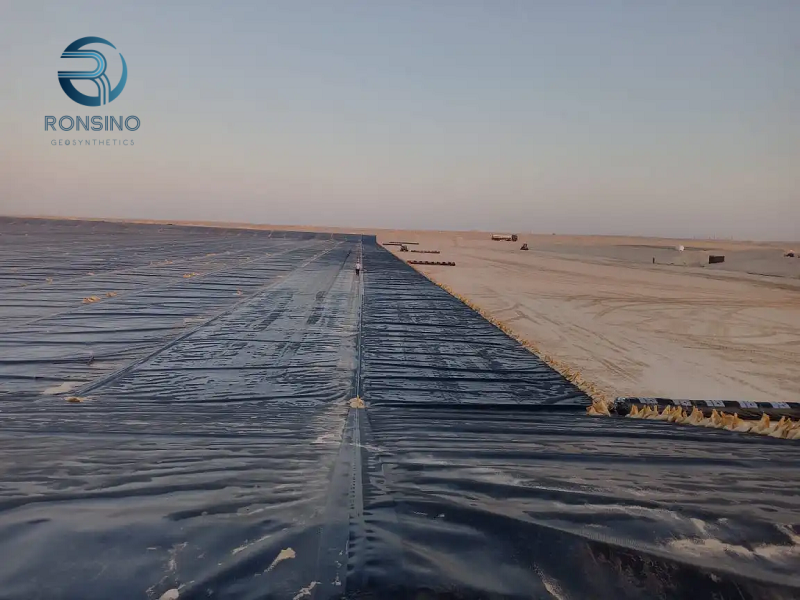
Bonding Method of Landfill cover Geomembrane Liner
Before bonding, remove sand, soil and other dirt on the membrane surface, and ensure that the membrane surface is clean. Using double-track hot-melt welding method:
Before hot melt fusion, the overlap area of the two impermeable membranes must be exactly 15 cm. The process includes: accurately adjusting the mechanical compression force, setting the ideal thermal conditions, determining the operating speed, confirming the integrity of the suture overlap, preparing the film delivery system and activating the power transmission mechanism. All welds must be uniform and beautiful, with no unusual blending patterns or incomplete areas. Basic parameters (thermal energy input, travel speed, compression force) must be verified through sufficient experiments. The upper edge of the impermeable membrane adjacent to the weld needs to be chamfered to enhance interface integrity. During hot melt fusion, the overlapping area should be kept at least 15 cm, and the suture thickness must be 1.2 times the original film thickness. Depressions in wrinkled areas must be completely eliminated to ensure a smooth surface. If extrusion fractures or corrugated surfaces occur, the overlapping area must be extended to not less than 10 cm. Direct overlap is prohibited and T-shaped joints must be welded in offset positions. All welds must be clear and continuous, with no interruptions or unfused areas.
Anchoring method between the cover 80 mil Plastic Sheet and the ground: the groove anchoring method should be adopted. The anchoring groove should be separated from the construction plane by 40 cm, the groove width is 4 cm, and the groove depth is 40 cm. Pull the film into the U-shaped groove, and use sandbags or Dirt holds it in place.
Leak-proof inspection method after the covering geomembrane sheet is laid
Once a waste disposal site is securely sealed with specialized protective barriers, a comprehensive leak-proof inspection must be carried out to quickly identify and address deficiencies and prevent contamination from penetrating. This assessment typically includes a visual inspection, air pressure verification, and barrier structural integrity testing. The visual inspection requires careful inspection of the surface integrity of the impermeable membrane, the tightness of welds and joints, and the presence of foreign matter in the support medium. Vacuum and pressure tests can be performed when necessary. During the pressure test, the system needs to maintain a stable pressure within five minutes, allowing a maximum pressure drop of 20% due to material elasticity. For 80-mil polyethylene sheet, the tensile standard requires that the weld must not break during peel and shear strength tests, but the base material needs to break to ensure the weld complies with regulations.
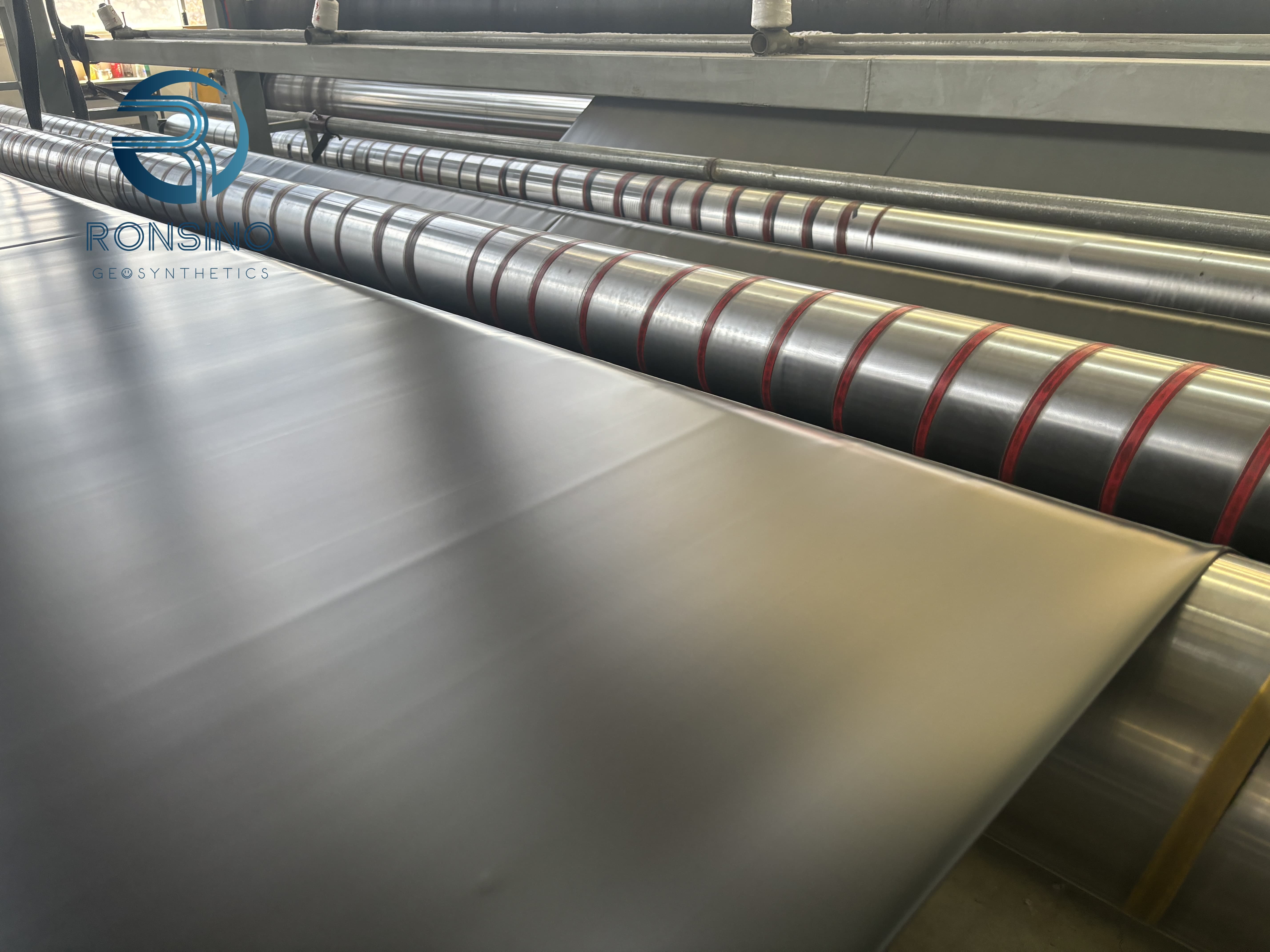
Benefits of 80 mil Plastic Sheet for Landfill Project
Reduce the infiltration of rainwater and other external water into the garbage dump to achieve the purpose of reducing landfill leachate;
Control the odor emission of the landfill and the release and collection of combustible gas from the upper part of the landfill in an organized manner to achieve the purpose of pollution control and comprehensive utilization;
Inhibit the reproduction and spread of pathogenic bacteria and their communicators, mosquitoes and flies;
Prevent surface runoff from being polluted, avoid the spread of garbage and its direct contact with humans and animals;
Prevent soil erosion;
Promote the stabilization of the garbage heap as soon as possible;
Provide a surface that can be landscaped, provide soil for the growth of vegetation, facilitate the reuse of landfill land, etc.
Specifications of 80 mil Plastic Sheet Brazil for Landfill Project
Total HDPE Geomembrane sheet quantity–114,000 squares meters
Specifications – 2mm
Each roll size is 7m*50m
About RONSINO
Since its establishment in 2007, RONSINO has been committed to providing one-stop geosynthetic materials products and solutions to customers around the world. The company has successfully sold a variety of high-performance, cutting-edge technology geomembranes, geotextiles, geocells, bentonite waterproof blankets (GCLs), drainage boards, geogrids and other products to more than 81 countries and regions. With its rich industry experience and excellent product quality, RONSINO has established a good international reputation in the field of geosynthetic materials, providing reliable material guarantee for various engineering projects.
RONSINO is not only manufacturing best quality geosynthetic products but also providing professional design and installation service. If you have any questions or inquiries, please contact us, we will reply as soon as possible.